_upscaled.png)
The Benefits of Dancing: What dance actually does for your child
- STUDIO ONE DANCE ACADEMY

- Jun 6
- 6 min read
Updated: Jun 6
And why the studio you choose makes all the difference.
QUICK SUMMARY
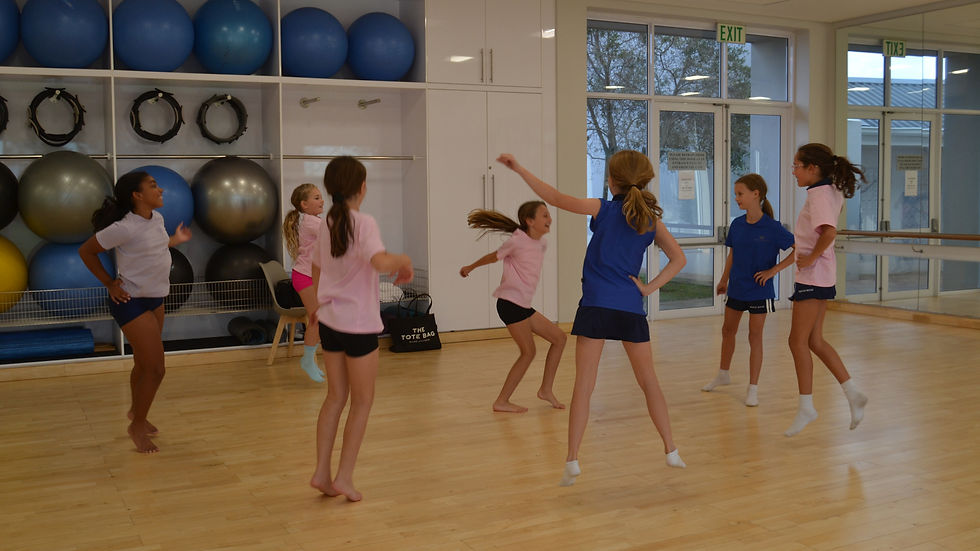
Dance is genuinely good for children's mental health: not just as exercise, but because it combines movement, social belonging, and creative expression simultaneously. Recent research backs this up, with studies (Resources & Research Papers used as sources in this post list below) showing consistent improvements in confidence, emotional regulation, wellbeing, and life satisfaction.
Beyond the research, dance builds skills that are hard to measure: resilience under pressure, the ability to take feedback constructively, and deep friendships forged through shared effort.
The catch? The studio matters as much as the dancing. Benefits are strongest when children have consistent, caring teachers who know them over years, not just instructors cycling through faces. The best studios aren't defined by trophies, but by genuine relationships.
Bottom line: Dance gives children confidence, emotional resilience, and a sense of belonging, and when taught well, those benefits extend far beyond the studio.
Is dance worth it?
It is a fair question. Between the fees, the costume runs, the competition Saturdays, and the endless drives across town, putting a child in dance is a real commitment. You deserve an honest answer. The research says: yes, and in ways most parents do not expect.
Dance is often sold as simply: 'on the surface benefits'.
Grace.
Coordination.
Performance.
But the evidence building through peer-reviewed studies in the past decade, especially the most recent years (2024 and 2025) points to something much deeper.
Dance reshapes how children understand their own bodies,
how they regulate their emotions,
how they connect with others,
and how they show up in the world.
The physical training is just the beginning.
In this blog post we cover what the science actually shows, where the real returns live, and why the environment in which your child dances matters just as much as the dancing itself.
The body learns more than steps
The obvious benefit of dance is physical, and it is real.
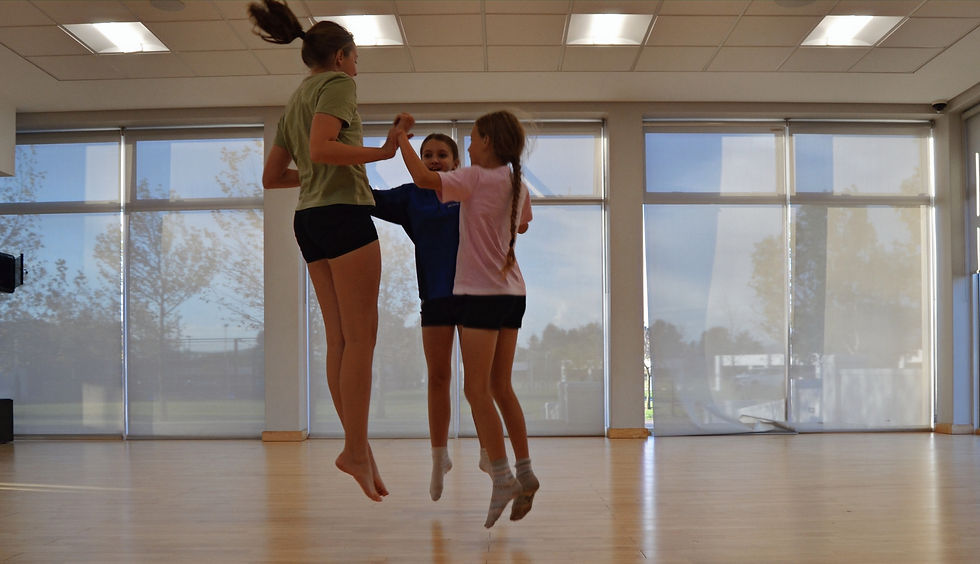
Children who dance regularly develop coordination, balance, spatial awareness, and core strength in ways that carry over into every other physical activity they do.
A 2024 study published in Frontiers in Psychology (in 2025) found that dance interventions improved physical and mental health indicators more significantly than comparable traditional exercise programmes.
But the physical story goes deeper than fitness.
Dance teaches children something called proprioception, the body's awareness of itself in space. This is a foundational skill. Children who develop strong proprioception tend to move more confidently, recover from physical setbacks faster, and carry themselves differently. The posture a dancer develops is not just aesthetic. It is a neurological pattern, built repetition by repetition, that shapes how they inhabit their own body for life.
At Studio One, classes are structured with this in mind.
Technical training is not just about producing performance-ready bodies.
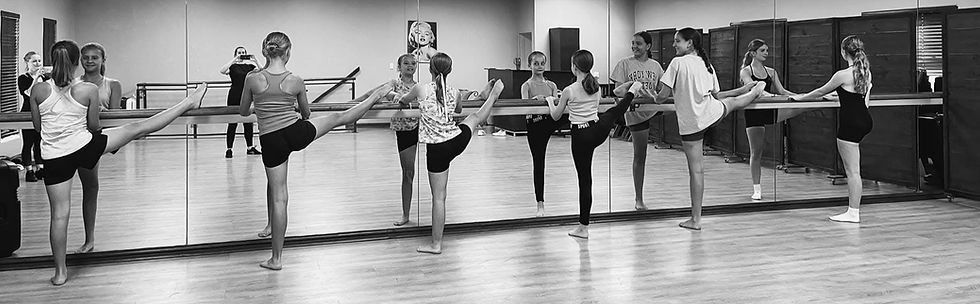
It is about building physical literacy across every age group, so that a seven-year-old and a seventeen-year-old both finish class feeling stronger and more capable than when they walked in.
The confidence nobody sees coming
Ask any parent whose child has danced for more than a year what surprised them most.
Almost universally, the answer is not flexibility or stage presence. It is confidence.
Research published in Early Child Development and Care in January 2025 found that dance interventions produce measurable increases in children's self-confidence and sense of personal agency, including in children who had previously shown limited confidence in structured settings.
A separate 2025 study in Frontiers in Psychology found that dance reduced social anxiety and enhanced self-concept in young people, with results that outperformed other physical activity interventions.
Dance builds confidence differently to sport. It requires expression, not just performance. A child cannot hide behind a team or a score. They have to show up as themselves.
This is partly why the relationship between a student and their teacher matters so much. A child who feels genuinely seen by their instructor, not just assessed, is far more willing to take the risks that build confidence.
Trying something hard.
Performing despite nerves.
Accepting feedback and trying again.
At Studio One, we believe that confidence is not a side effect of good teaching. It is the goal.
Technique is the vehicle.
Mental health: the benefit most studios do not talk about
The conversation around children's mental health has shifted significantly in recent years. Anxiety, social withdrawal, and emotional dysregulation are not edge cases anymore. Parents are looking for activities that do more than keep their children busy. They are looking for things that genuinely help.
A comprehensive scoping review published in early 2025, covering 46 studies across all educational levels, found that dance interventions in educational contexts consistently improved student wellbeing, with benefits reported across:
confidence,
life satisfaction,
emotional regulation,
and social connection.
A qualitative study published in The Journal of Positive Psychology in 2025 found that children's dance participation was strongly and consistently linked to general wellbeing and self-knowledge, with benefits that extended well beyond the studio.
The mechanism matters here.
Group dance is uniquely effective because it combines physical movement with social belonging and creative expression simultaneously.
A child who dances is not just exercising. They are learning to read a room, respond to music and movement, coordinate with others, and express something true about how they feel. These are exactly the skills that support emotional health across childhood and adolescence.
A 2024 study in Health Promotion Practice found that children who participated in creative dance activities felt more confident and more engaged in other areas of their lives, including schoolwork.
Benefits continued beyond the studio, with children practising at home and reporting a sustained sense of achievement.
Community is not a nice addition to good dance training. It is the mechanism that makes the mental health benefits real. A child who belongs somewhere dances better, and lives better.
What the studies cannot measure
For all the evidence, some of the most important returns from dance do not show up in a research paper.
There is the resilience of performing under pressure. The experience of working for months toward something, feeling unprepared right up until the moment the music starts, and then doing it anyway.
Children who perform regularly learn something fundamental about the gap between how they feel and what they are capable of. That lesson travels far beyond the stage.
There is the experience of receiving feedback and learning to use it rather than take it personally. Dance training, done well, is one of the few contexts in a young person's life where they are regularly told exactly what to improve and then given the tools and time to improve it. This is a skill. It does not come naturally to most people. It has to be taught, and it has to be modelled by teachers who give feedback with care rather than criticism.
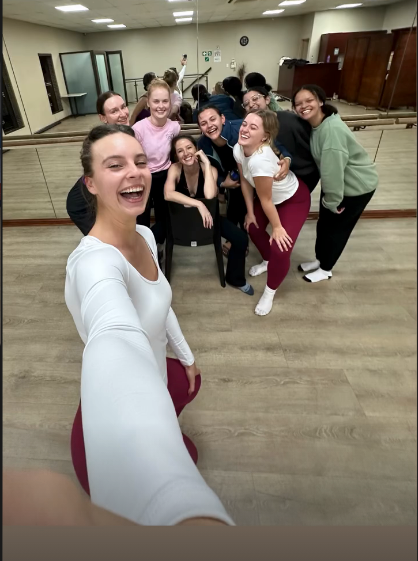
And there is the simple, profound experience of being part of something. The friendships formed in a dance studio have a particular quality. They are built in the context of shared effort, shared nerves, shared joy. Students who train together know each other differently to classmates who sit beside each other. They have seen each other struggle and succeed. That matters.
Why the studio matters as much as the dancing
All of the above is conditional.
The research on long-term outcomes in dance education is clearest in one respect:
the benefits are strongest, and most durable, when students have consistent, caring instruction over time.
A child who moves through multiple studios, or whose teachers treat them as one of a rotating roster of faces, does not get the same returns as a child who is genuinely known by their teachers across multiple years.
This is not a soft observation. It is supported by the same body of evidence that shows confidence and wellbeing gains in dance. The relational quality of instruction is a variable that researchers consistently identify as a differentiating factor.
The best studios are not the ones with the most trophies. They are the ones where students are genuinely seen, consistently, over time.
At Studio One, this belief is foundational.
The studio was built on the understanding that a dance school can be a community,
and that every student who walks through the door deserves teachers who invest in their journey rather than simply manage their progress.
We are proud of the medals and the competition results.
We are prouder of the students who come back year after year, who grow in ways that cannot be measured, and who carry what they learned here into the rest of their lives.
The relationship between a teacher and a student, sustained across years and across changes in school and schedule and circumstance, is where the real work of a dance education happens. It is also what makes the difference between a studio that teaches dance and one that changes lives.
So, is dance worth it?
Yes. Unambiguously yes.
Not just for the coordination or the stage presence or the competition medals.
For the confidence that builds quietly, week by week.
For the emotional resilience that comes from performing under pressure.
For the belonging that forms in a room full of people working toward the same difficult, beautiful thing.
For the relationship with a teacher who genuinely shows up for your child, not just during recitals, but across years.
Dance, done right, gives children a version of themselves they could not have found anywhere else.
If you would like to see what that looks like in practice, you are welcome to come and watch a class. We would love to show you.
Studio One Dance Academy · Blog Post #2
Brackenfell · Durbanville · Paarl · Franschhoek

Comments